In Charleston, SC, kitchen remodeling often centers on selecting the right quartz countertops or shaker cabinets. While visual appeal drives initial interest, the functionality of the layout determines the long-term satisfaction and value of the home.
A kitchen that looks good but functions poorly creates daily frustration. In the construction and remodeling industry, this usually comes down to one core concept: the kitchen work triangle.
For homeowners in Charleston, Goose Creek, and Mount Pleasant, understanding this design principle is essential before knocking down walls or ordering custom cabinetry. It ensures that the kitchen operates as an efficient workspace rather than just a showroom.
The mechanics of a functional kitchen layout
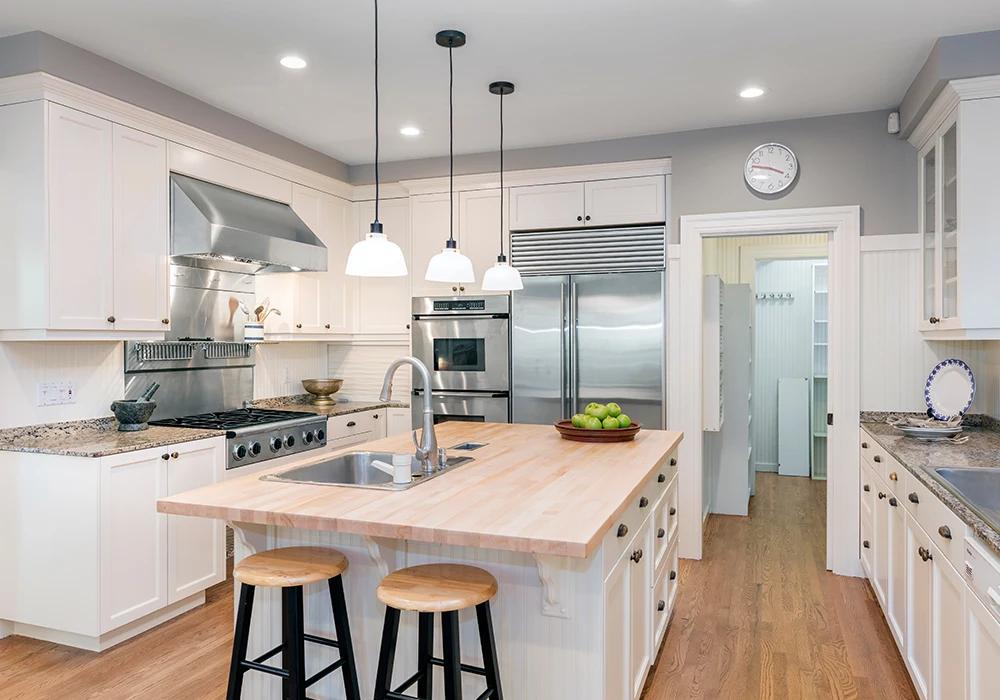
The “work triangle” connects the three primary work areas: the sink, the refrigerator, and the stove.
The goal is to keep the distance between these points close enough to minimize steps while cooking, but far enough apart to prevent cramping. In many older Charleston homes, these layouts were standard. However, during modern renovations, especially when removing walls for open-concept living, this triangle often gets broken or obstructed.
Maintaining this flow dictates how easily you can prepare meals, clean up, and move through the space without physical obstruction.
The Sink: The center of the workflow
The sink sees the most action in any kitchen. It involves food prep, hand-washing, and dish cleaning.
In a functional Charleston kitchen renovation, the sink must have clear access to both the refrigerator and the cooking surface. A common mistake in DIY layouts is placing the sink directly opposite a dishwasher or island with insufficient clearance. This creates a “traffic jam” where two people cannot occupy the space simultaneously.
Pro Tip: If your kitchen design includes an island, ensure the sink is positioned so that the dishwasher door can open fully without blocking the path to the stove. This preserves the flow during cleanup.
The Refrigerator: Accessible but out of the way
The refrigerator acts as the pantry hub for perishables. It needs to be accessible to the cook but also to family members grabbing a drink or a snack.
Placing the refrigerator outside the primary triangle often results in inefficient cooking patterns. Conversely, placing it too deep inside the work zone means family traffic interrupts the cook.
A professional kitchen remodeler creates a “landing zone” of counter space next to or opposite the fridge. This allows for immediate loading and unloading of groceries, reducing the time the door stays open. This is a critical factor for energy efficiency during humid Charleston summers.
The Stove: Safety and ventilation priorities
The stove or range is the third point of the triangle. This area requires specific safety considerations regarding clearance and ventilation.
In many Charleston renovations, moving a stove requires evaluating gas lines and electrical outputs. The stove should be positioned to allow easy transfer of heavy pots from the sink without crossing a major walkway.
Tips for Stove Placement:
- Traffic flow: Ensure the stove door does not block the main exit of the kitchen when open.
- Ventilation: Proper range hoods are necessary to remove heat and moisture, protecting your cabinets and drywall from warping over time.
Adapting the triangle to modern Charleston floor plans
Strict adherence to the triangle is not always possible in every layout, particularly in galley kitchens or large open-concept homes in Mount Pleasant and Goose Creek. However, the principles of the triangle must remain.
The zone approach for large kitchens
In larger remodels, the triangle evolves into “work zones.” This might involve a secondary prep sink or a dedicated baking station. The objective remains the same, which is to reduce unnecessary movement.
One Stop Contracting focuses on adapting these zones to the specific architecture of the house. Whether dealing with a historic property or a new build, the layout must respect the structural limits of the room while maximizing utility.
Handling kitchen islands
Islands are the most requested feature in kitchen remodeling, but they often disrupt the triangle if sized incorrectly. An island should not cut through the direct line between the fridge and the sink by more than 12 inches.
A professional contractor calculates these distances during the estimate phase to prevent installing a permanent structure that becomes a permanent obstacle.
How One Stop Contracting ensures functional design
One Stop Contracting provides general remodeling and handyman services with a focus on practical, long-lasting results. With over 7 years of experience serving the Charleston area, the team understands that a renovation is a significant financial commitment.
We do not just install fixtures. We assess how the new layout will function for the next decade.
Our approach includes:
- Structural Assessment: Checking plumbing and electrical feasibility before design is finalized.
- Clear Communication: Explaining exactly why a layout works or fails based on measurements, not guesses.
- Reliable Execution: From demolition to finish carpentry, we handle the project to keep timelines tight.
Build a kitchen that works as hard as you do
A kitchen remodel is one of the few projects that can significantly increase the resale value of a property in Charleston, SC. However, this value depends on functionality. Buyers and appraisers recognize a layout that makes sense.
Avoid the cost of correcting a poor layout later. Prioritize the work triangle and professional planning now.
Ready to improve your kitchen’s flow and value? Call One Stop Contracting at (843) 694-2581 today for a reliable estimate.