Charleston SC Home Remodeling Permits & HOA Approvals: A Step-by-Step Guide for Homeowners
Table of contents
Introduction
Planning a remodeling project is exciting, but many homeowners quickly discover that choosing cabinets, flooring, or fixtures is only part of the process. Before construction begins, there may be paperwork, approvals, inspections, and communication with multiple organizations.
If you’ve searched for
charleston sc home remodeling permits hoas, you’re probably trying to understand what approvals your project needs and how to avoid unnecessary delays.
Across Goose Creek, Charleston, North Charleston, Summerville, Mount Pleasant, Daniel Island, Hanahan, Moncks Corner, and surrounding Lowcountry communities, many homes fall under both local building departments and Homeowners Associations (HOAs). That means a remodeling project may require approval from your municipality, your HOA, or both.
Understanding how these systems work together can save you time, money, and frustration.
At One Stop Contracting LLC, homeowners appreciate having one licensed and insured contractor who manages projects from planning through completion while providing clear communication every step of the way. Instead of navigating permits, documentation, scheduling, and inspections alone, you can work with a team experienced in residential remodeling throughout the Charleston area.
If you’re considering a kitchen remodel, bathroom renovation, whole-home remodel, or another major renovation, scheduling a consultation before beginning the approval process can help you avoid costly setbacks. Call
(843) 694-2581 to discuss your project.
Understanding permits vs. HOA approvals
One of the biggest misconceptions homeowners have is believing that obtaining one approval automatically satisfies every requirement.
In reality, municipal permits and HOA approvals serve two completely different purposes.
Municipal building permits
Building permits are issued by the local government to help ensure construction complies with applicable building codes and safety standards.
Depending on where you live, your project may involve local departments serving Charleston County, Berkeley County, or Dorchester County.
For example, homeowners researching
berkeley county building permits often discover that permit requirements vary depending on the municipality and the scope of work.
Building officials typically review plans to verify that structural work, electrical systems, plumbing, mechanical systems, and other components meet current safety requirements.
HOA approvals
Homeowners Associations focus on maintaining neighborhood standards rather than enforcing building codes.
Many planned communities have Architectural Review Boards (ARBs) that review proposed improvements before construction begins.
These reviews often consider:
- Exterior appearance
- Architectural consistency
- Roofing materials
- Exterior colors
- Additions
- Window replacements
- Outdoor structures
- Property value impacts
Understanding
lowcountry HOA remodeling rules helps homeowners avoid violations that could delay construction or require changes after work has already started.
Why many Charleston-area projects require both approvals
Many remodeling projects require approvals from both your municipality and your HOA because each organization evaluates different aspects of the project.
Imagine you’re adding a covered porch.
Your city or county may review:
- Structural engineering
- Foundation requirements
- Building safety
- Code compliance
Meanwhile, your HOA may review:
- Roof style
- Exterior finishes
- Color selection
- Overall neighborhood appearance
Receiving one approval does not automatically grant the other.
Starting work before completing both approval processes can result in:
- Construction delays
- Failed inspections
- HOA violations
- Additional costs
- Required modifications
- Potential stop-work orders
Working with an experienced remodeling contractor helps ensure these approvals are coordinated before construction begins.
Which remodeling projects typically require permits
Not every remodeling project requires a building permit, but many substantial renovations do.
Projects commonly requiring permits include:
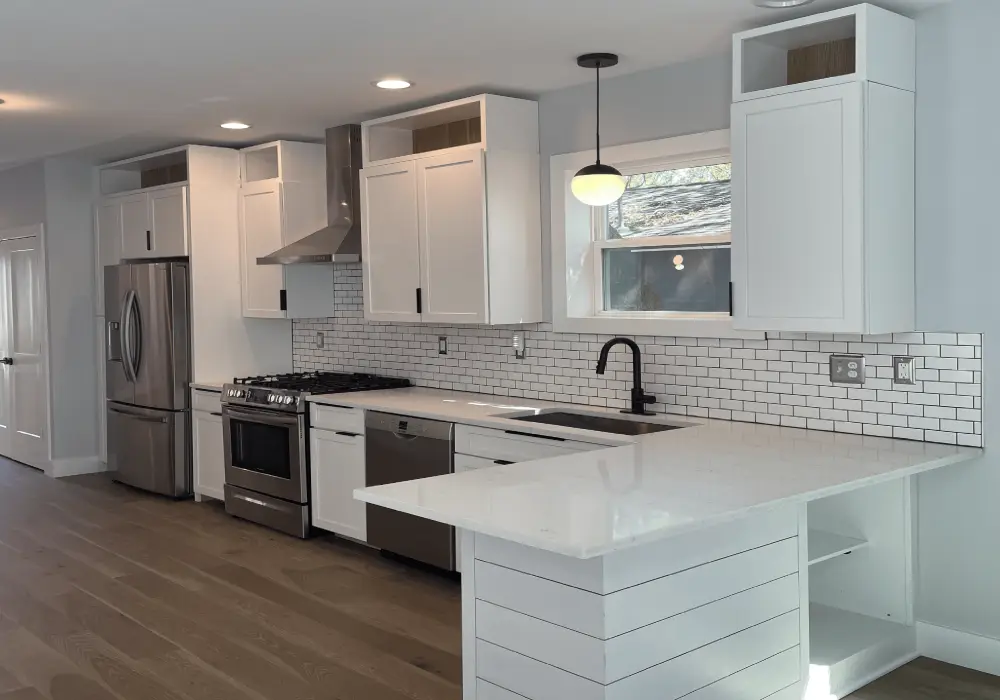
Kitchen remodeling
Kitchen remodeling frequently involves:
- Electrical upgrades
- Plumbing relocation
- Wall removal
- Structural modifications
- Ventilation improvements
If you’re planning a complete kitchen remodel, permit coordination should be part of your project planning from the beginning.
Bathroom remodeling
Bathroom renovations often include:
- Plumbing changes
- Electrical work
- New ventilation
- Layout modifications
Professional planning helps ensure inspections occur at the proper stages.
Whole-home remodeling
Large renovations commonly involve multiple trades working under coordinated schedules.
Permits may apply to:
- Structural changes
- Electrical systems
- Mechanical systems
- Plumbing systems
- Room additions
Because these projects are more complex, experienced project management becomes even more valuable.
General home renovations
Depending on the scope of work, general remodeling projects may involve permits when they affect structural or building systems.
Each project should be evaluated individually rather than assuming permits are unnecessary.
How HOA Architectural Review Boards evaluate projects
Architectural Review Boards generally want to preserve the appearance and consistency of the community while allowing homeowners to improve their properties.
Although every HOA has its own guidelines, review committees often evaluate:
- Exterior design compatibility
- Roof materials
- Siding selections
- Paint colors
- Windows and doors
- Fencing
- Outdoor additions
- Visibility from neighboring properties
The review process is usually easier when homeowners submit complete documentation rather than incomplete applications.
Experienced contractors understand what information is commonly requested and help organize documentation before submission.
Documents commonly required before construction
Every project is different, but homeowners are often asked to provide several supporting documents before approvals are granted.
These may include:
- Detailed project descriptions
- Construction drawings
- Floor plans
- Site plans
- Material selections
- Product specifications
- Color samples
- Photographs
- Contractor information
- Insurance documentation
Some municipalities may request additional information depending on the complexity of the renovation.
Similarly, HOAs may require architectural applications or supporting documents before scheduling review meetings.
Preparing everything correctly the first time helps reduce unnecessary delays.
The typical approval timeline
Although every project is unique, most remodeling projects follow a similar sequence.
Step 1: Initial consultation
The contractor evaluates your goals, discusses the scope of work, and identifies whether permits or HOA approvals are likely to be required.
Step 2: Project planning
Plans, measurements, material selections, and project documentation are prepared.
Step 3: HOA submission
If applicable, documentation is submitted to the Architectural Review Board for consideration.
Step 4: Permit application
Permit documentation is submitted to the appropriate building department.
Depending on the project location, this may involve agencies serving Charleston County, Berkeley County, or Dorchester County.
Step 5: Approval process
Questions or requested revisions are addressed before final approvals are issued.
Step 6: Construction begins
Once approvals are complete, work can begin according to the project schedule.
Step 7: Inspections
Required inspections occur during various stages of construction.
Step 8: Project completion
Final inspections are completed, and homeowners can enjoy their newly remodeled space with confidence.
Common mistakes that delay remodeling projects
Many delays can be avoided through careful planning.
Some of the most common mistakes include:
Starting work too early
Beginning construction before approvals are complete can create significant problems later.
Waiting for approvals protects both your investment and your timeline.
Submitting incomplete documentation
Missing drawings, specifications, or application forms often result in additional review time.
Complete documentation helps projects move more efficiently.
Hiring unqualified contractors
Homeowners sometimes focus solely on price without considering experience.
Choosing a licensed and insured contractor familiar with local remodeling requirements helps reduce unnecessary complications.
Understanding
charleston contractor licensing requirements also helps homeowners make informed hiring decisions.
Underestimating scheduling
Permits, inspections, deliveries, and subcontractor scheduling all influence project timelines.
Experienced contractors coordinate these moving parts to minimize disruptions.
How an experienced contractor simplifies the process
Home remodeling involves much more than construction.
Successful projects require planning, communication, scheduling, documentation, inspections, and coordination among multiple parties.
That’s why many homeowners prefer working with one company that manages the entire process.
One Stop Contracting provides:
- Licensed and insured remodeling services
- Professional project planning
- Reliable scheduling
- High-quality workmanship
- Clear communication throughout the project
- Coordination with permitting requirements
- Guidance through HOA approval processes
- One point of contact from planning through completion
Rather than leaving homeowners to navigate unfamiliar procedures alone, the company helps simplify each stage of the remodeling journey.
If you’re still in the planning phase, scheduling a consultation before preparing applications can save valuable time. Call
(843) 694-2581 to discuss your renovation goals.
Remodeling services that often involve permits
Many of One Stop Contracting LLC’s services involve planning that may include permits or approvals depending on the project’s scope.
Kitchen remodeling
Kitchen remodeling often combines cabinetry, flooring, lighting, plumbing, electrical work, and layout improvements into one coordinated project.
Professional planning helps ensure everything progresses smoothly.
Bathroom remodeling
Bathroom renovations frequently involve multiple building systems that benefit from experienced coordination and inspection scheduling.
Whole-home remodeling
Whole-home remodeling requires careful sequencing, documentation, scheduling, and communication throughout every phase.
Working with one contractor helps keep the project organized from start to finish.
General home renovation
Whether you’re updating several rooms or making structural improvements, experienced planning reduces stress and improves efficiency.
Handyman services
While many handyman projects involve routine repairs that may not require permits, larger repairs or improvements should always be evaluated before work begins.
If you’re unsure whether your planned project requires permits or HOA approval, speaking with an experienced remodeling contractor is an excellent first step.
Frequently asked questions
Do all remodeling projects require permits?
No. Requirements depend on the scope of work and the systems involved. Structural, plumbing, electrical, or mechanical changes are more likely to require permits than cosmetic updates.
Can my HOA approve a project without a building permit?
Yes. HOA approval and municipal permits are separate processes. Receiving one does not automatically satisfy the other.
Can I begin construction while waiting for HOA approval?
It’s generally best to wait until all required approvals have been obtained before construction begins.
Who handles permit applications?
Many homeowners choose experienced contractors who assist with permit coordination and documentation as part of project management.
Do kitchen remodels usually require permits?
Many kitchen remodels do, especially when plumbing, electrical systems, or structural components are modified.
Will my bathroom remodel need inspections?
Projects involving permitted work often include inspections at various stages of construction.
Why is hiring a licensed and insured contractor important?
Licensed and insured contractors provide professional project management, quality workmanship, and familiarity with local approval processes, helping homeowners reduce unnecessary risks.
When should I contact a remodeling contractor?
The best time is before submitting applications or purchasing materials. Early planning helps identify approval requirements, improve scheduling, and avoid costly changes later.
Conclusion
Navigating
charleston sc home remodeling permits hoas doesn’t have to be overwhelming. Once you understand the difference between municipal permits and HOA approvals, the remodeling process becomes much easier to plan.
Whether you’re renovating a kitchen in Goose Creek, updating a bathroom in Mount Pleasant, remodeling a home in Summerville, or planning a major renovation anywhere throughout Charleston County, Berkeley County, or Dorchester County, proper planning is one of the most important investments you can make.
One Stop Contracting LLC has been serving homeowners since 2018 with licensed and insured remodeling services, dependable scheduling, high-quality craftsmanship, and clear communication from planning through project completion. From helping coordinate permits and approvals to delivering beautiful finished spaces, the goal is to make remodeling as stress-free as possible.
Before starting your next kitchen remodel, bathroom renovation, home remodeling project, or general renovation, schedule a consultation with One Stop Contracting LLC. Call
(843) 694-2581 to discuss your project, receive professional guidance, and move forward with confidence.